Digital Panumbra
Digital Panumbra
Digital Panumbra
Category:
Category:
Building Project
Building Project
Service:
Service:
Architecture
Architecture
Year:
Year:
2024
2024
Credits
Ben Spong
Design Tutor
Stefan Lengen
Design Tutor
Links
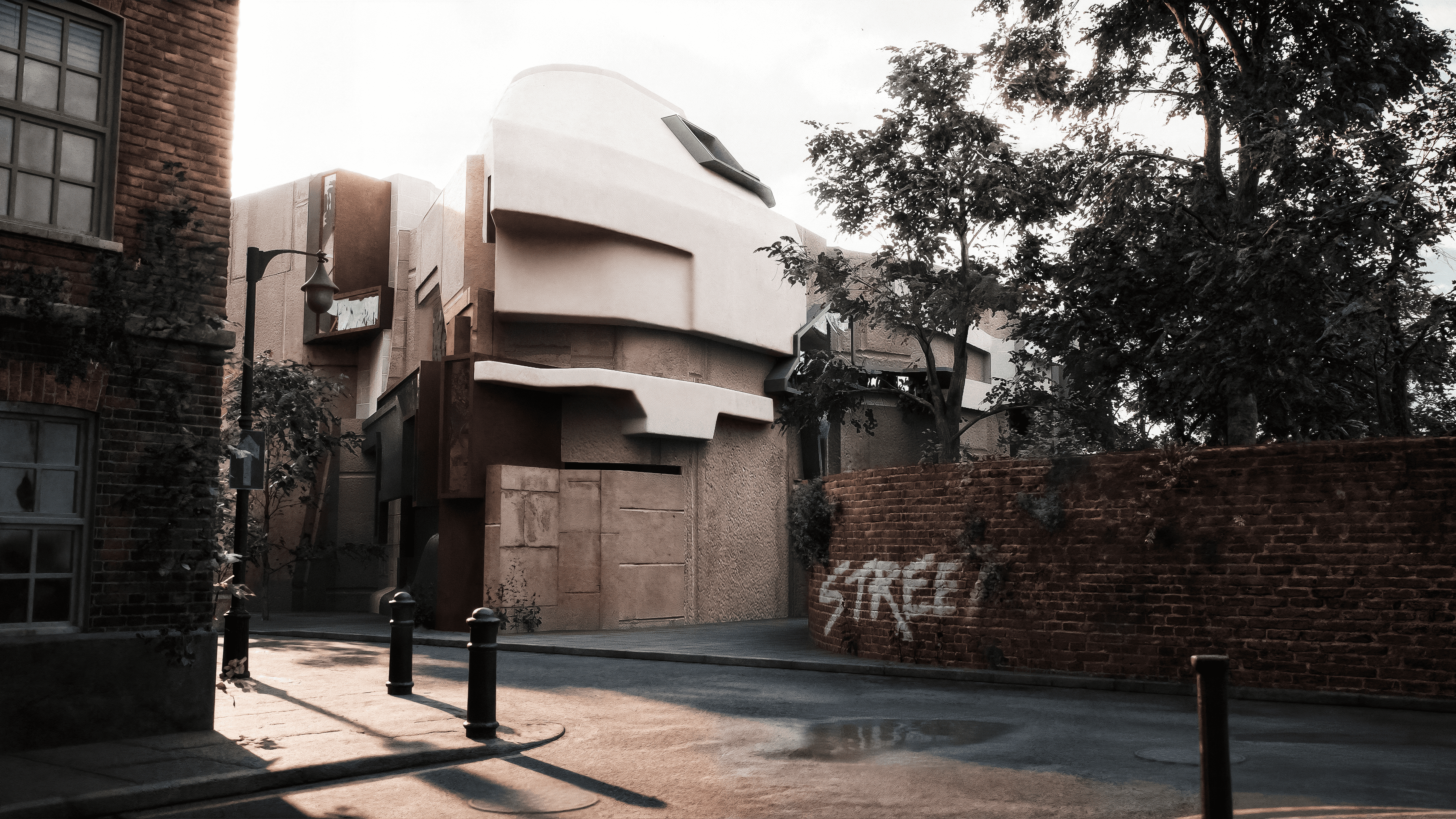
This project was designed using 3D scanning in unconventional ways, iterating the design based on voids and glitches in the scans to reassess the fleeting images and objects of everyday life. The indeterminate elements captured in the scans integrate the designer’s authorship with the hyper-precise scanner. This approach synthesises perception, memory, and time, proposing a novel architectural conservation technique in response to consultations between the residents of Waltham Abbey and the council about the area’s refurbishment.
This project was designed using 3D scanning in unconventional ways, iterating the design based on voids and glitches in the scans to reassess the fleeting images and objects of everyday life. The indeterminate elements captured in the scans integrate the designer’s authorship with the hyper-precise scanner. This approach synthesises perception, memory, and time, proposing a novel architectural conservation technique in response to consultations between the residents of Waltham Abbey and the council about the area’s refurbishment.
There is no way to avoid scanning shadow or void by employing a single scan, as if it were an obstacle occlusion in perspective. We convert the redefined living room into a mesh, they form a new spatial form, their sections seem to flow, the sofa, the boxes piled up on the floor become part of the indoor form as well as part of the outdoor form.
There is no way to avoid scanning shadow or void by employing a single scan, as if it were an obstacle occlusion in perspective. We convert the redefined living room into a mesh, they form a new spatial form, their sections seem to flow, the sofa, the boxes piled up on the floor become part of the indoor form as well as part of the outdoor form.
In the scanning process of the site, a theoretical minimum of 20 scans is normally required to comprehensively map the area and avoid the creation of undetectable voids within the scan data. However, for this project, the number of scans was deliberately reduced. This reduction in data capture allowed for the dynamic movement of the site's entourage to partially obscure and distort the scanned environment. As a result, the rendered site diverges from its real-world counterpart, showcasing a manipulated perception influenced by selective data acquisition.
In the scanning process of the site, a theoretical minimum of 20 scans is normally required to comprehensively map the area and avoid the creation of undetectable voids within the scan data. However, for this project, the number of scans was deliberately reduced. This reduction in data capture allowed for the dynamic movement of the site's entourage to partially obscure and distort the scanned environment. As a result, the rendered site diverges from its real-world counterpart, showcasing a manipulated perception influenced by selective data acquisition.
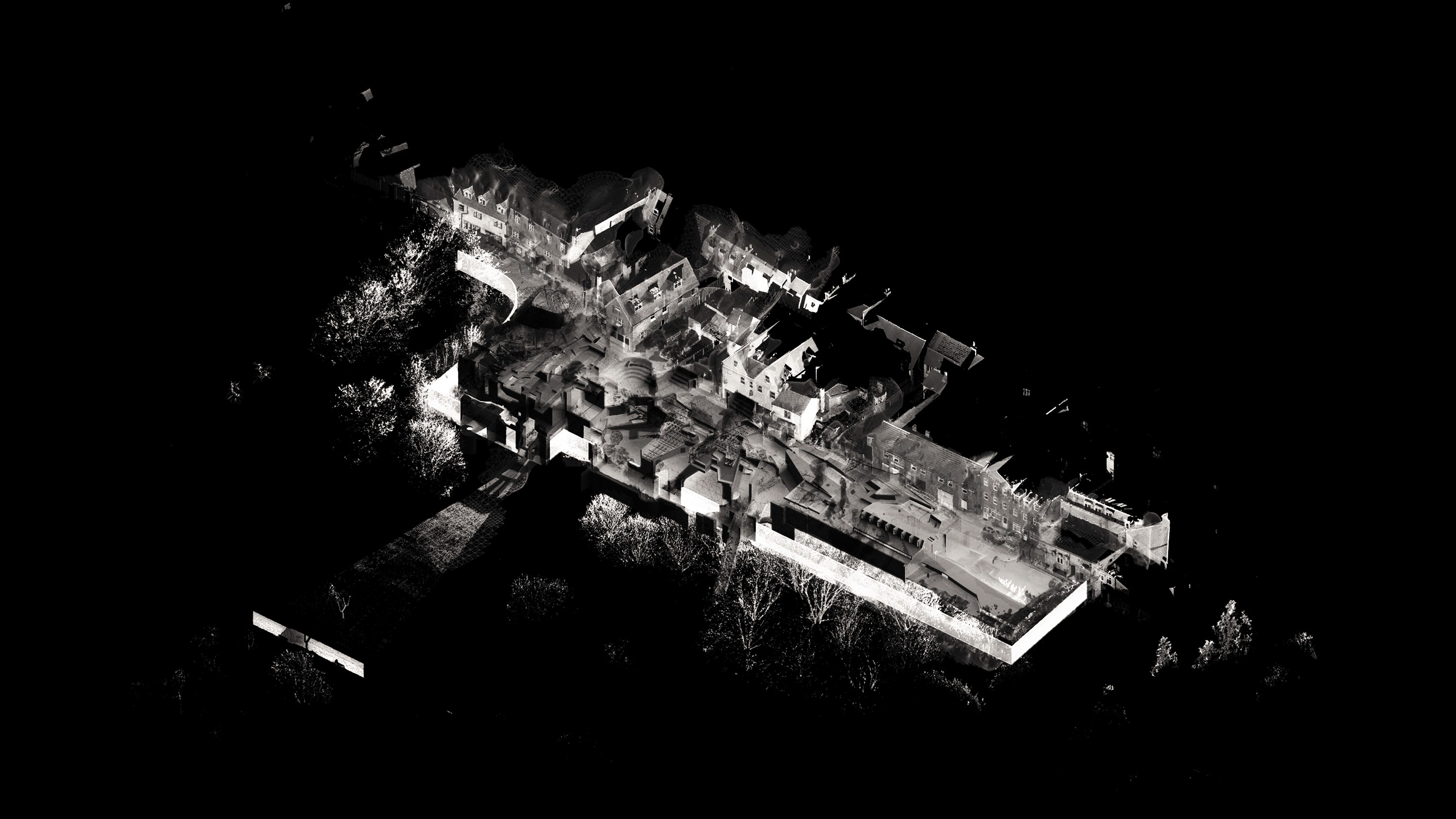
This project reimagines architectural surveying methods using a contentious conservation site at Waltham Abbey as its testing ground. Rather than employing LiDAR for precise geometric capture, scanning was restricted to eight positions, deliberately preserving imperfections, gaps, and edge noise. By controlling scanning intervals, the point cloud records the shifting interplay of light, shadow, and human movement over time, generating a processed, unstable version of the site.
This project reimagines architectural surveying methods using a contentious conservation site at Waltham Abbey as its testing ground. Rather than employing LiDAR for precise geometric capture, scanning was restricted to eight positions, deliberately preserving imperfections, gaps, and edge noise. By controlling scanning intervals, the point cloud records the shifting interplay of light, shadow, and human movement over time, generating a processed, unstable version of the site.
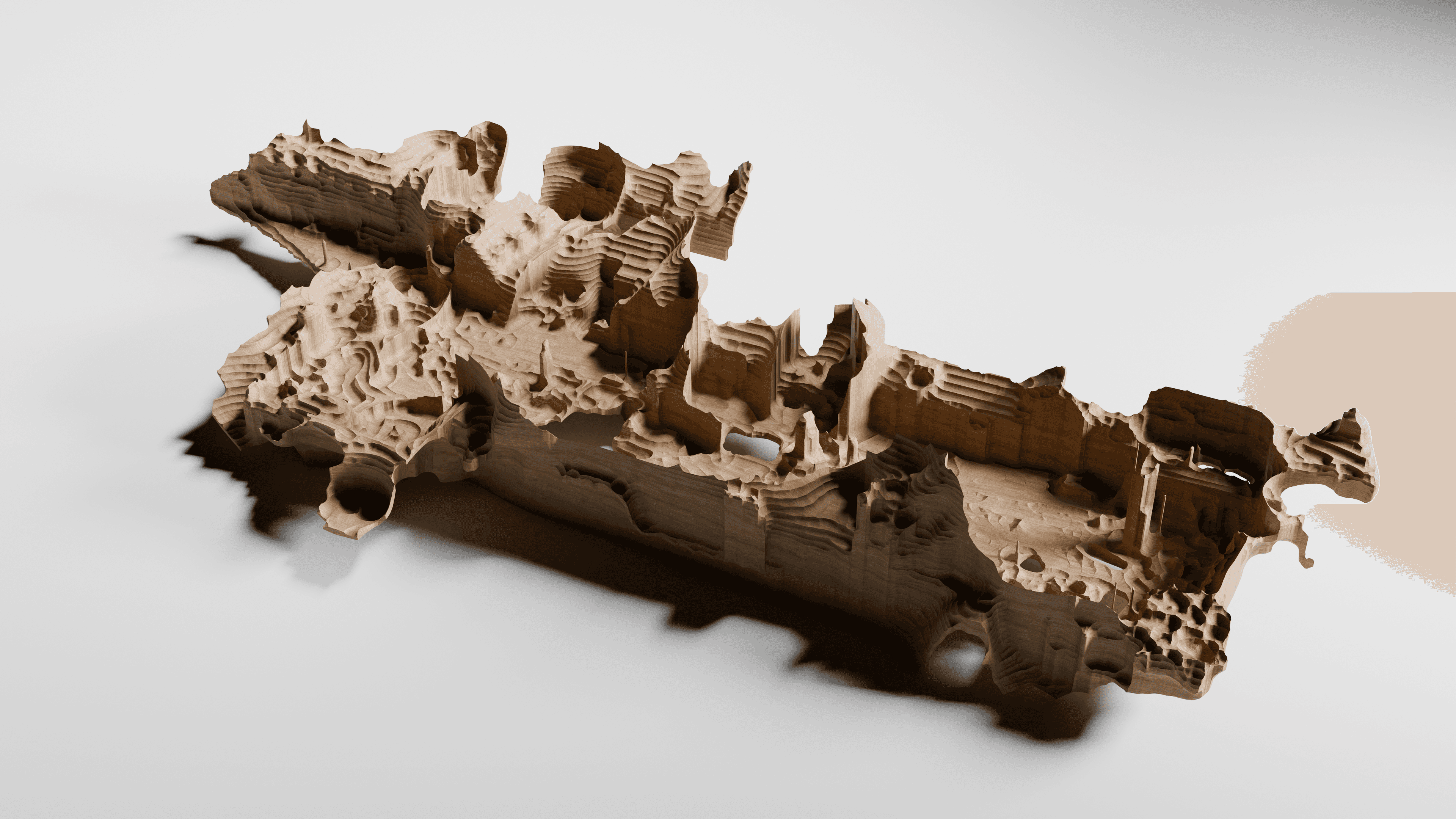
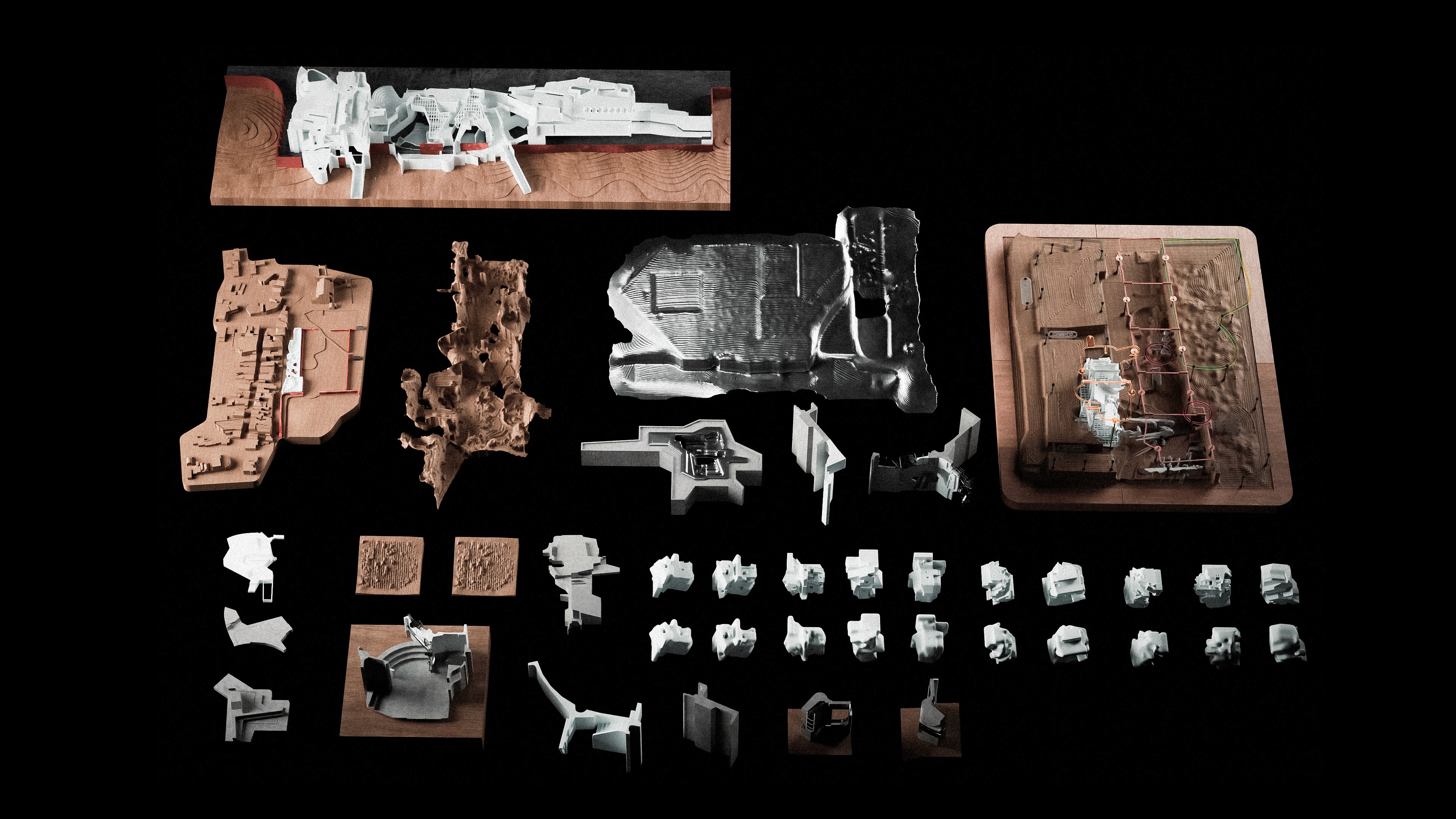
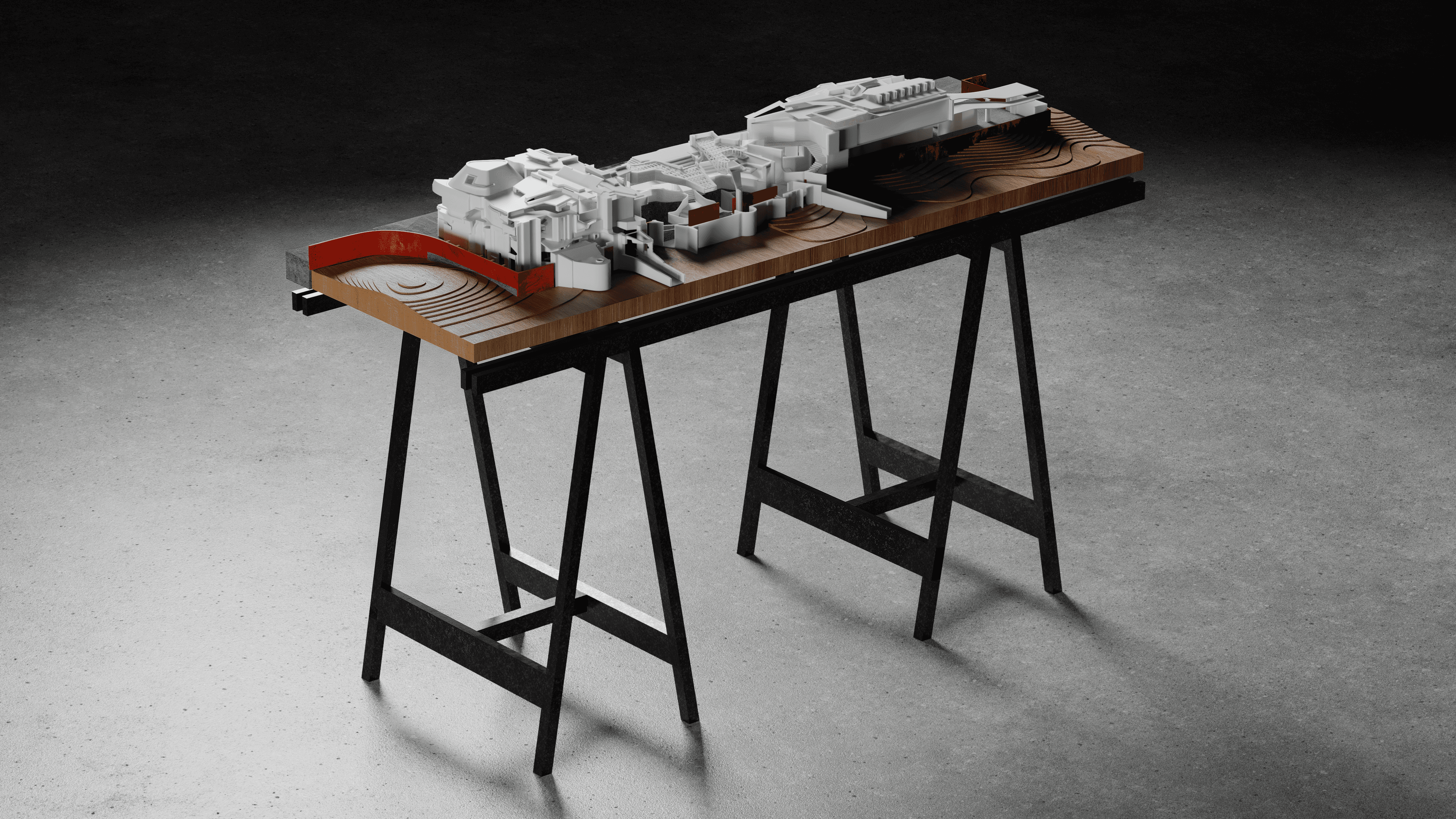
Building upon this, I constructed a “site” model of my own creation, which intersects with the real site. The point cloud was converted into surfaces of varying resolution, with embedded entourage elements becoming design drivers: wooden plinths represent the measured environment, while scan noise erodes straight lines and pulls the architecture towards a mirage-like state. In this approach, I sought to shape architecture not only for human perception but also for the machine vision of LIDAR.
Building upon this, I constructed a “site” model of my own creation, which intersects with the real site. The point cloud was converted into surfaces of varying resolution, with embedded entourage elements becoming design drivers: wooden plinths represent the measured environment, while scan noise erodes straight lines and pulls the architecture towards a mirage-like state. In this approach, I sought to shape architecture not only for human perception but also for the machine vision of LIDAR.
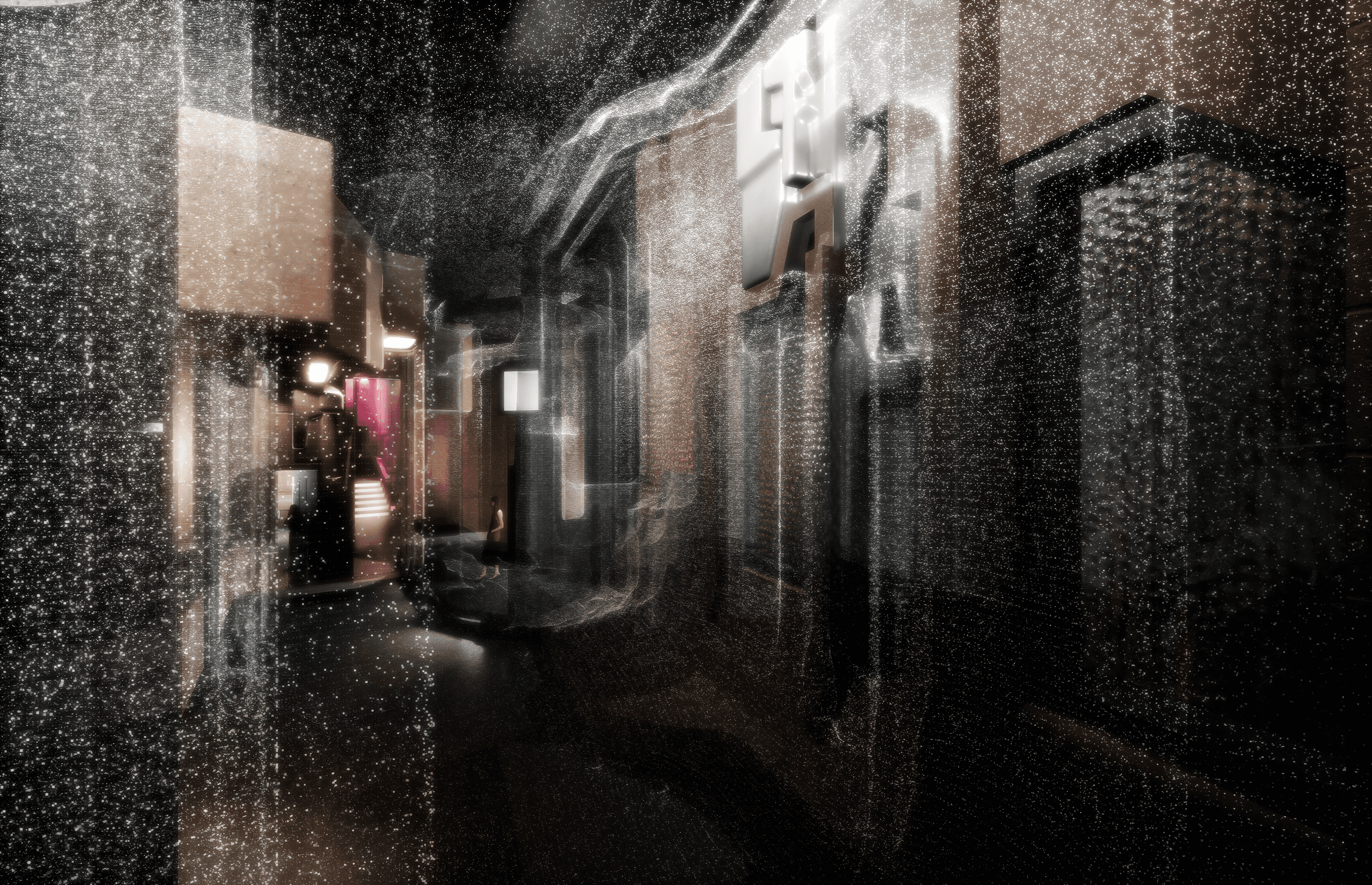
Scanned scenes of varying resolution are interwoven within the project, encoding and representing a dialogue between the period-specific elements of Waltham Abbey and the physical space. This creates an invisible conservation and establishes a dialogue of post-human perception. Blended Authorship of Site Information: A methodology was devised to create a unique version of the site. The scanning process introduces blurred noise, embedding it within the site’s new identity, intended to highlight elements of uncertain entourage.
Scanned scenes of varying resolution are interwoven within the project, encoding and representing a dialogue between the period-specific elements of Waltham Abbey and the physical space. This creates an invisible conservation and establishes a dialogue of post-human perception. Blended Authorship of Site Information: A methodology was devised to create a unique version of the site. The scanning process introduces blurred noise, embedding it within the site’s new identity, intended to highlight elements of uncertain entourage.