Writing Samples
Writing Samples
Writing Samples
Category:
Category:
History & Theory
History & Theory
Service:
Service:
Others
Others
Year:
Year:
2022
2022
Credits
These two essays reflect my ongoing interest in how architecture, images and urban space are used to construct power, ideology and everyday experience. One is a longer historical dissertation on Japanese colonial city-making in Northeast China; the other is a shorter critical essay on post-war architectural photography and publishing culture.
These two essays reflect my ongoing interest in how architecture, images and urban space are used to construct power, ideology and everyday experience. One is a longer historical dissertation on Japanese colonial city-making in Northeast China; the other is a shorter critical essay on post-war architectural photography and publishing culture.
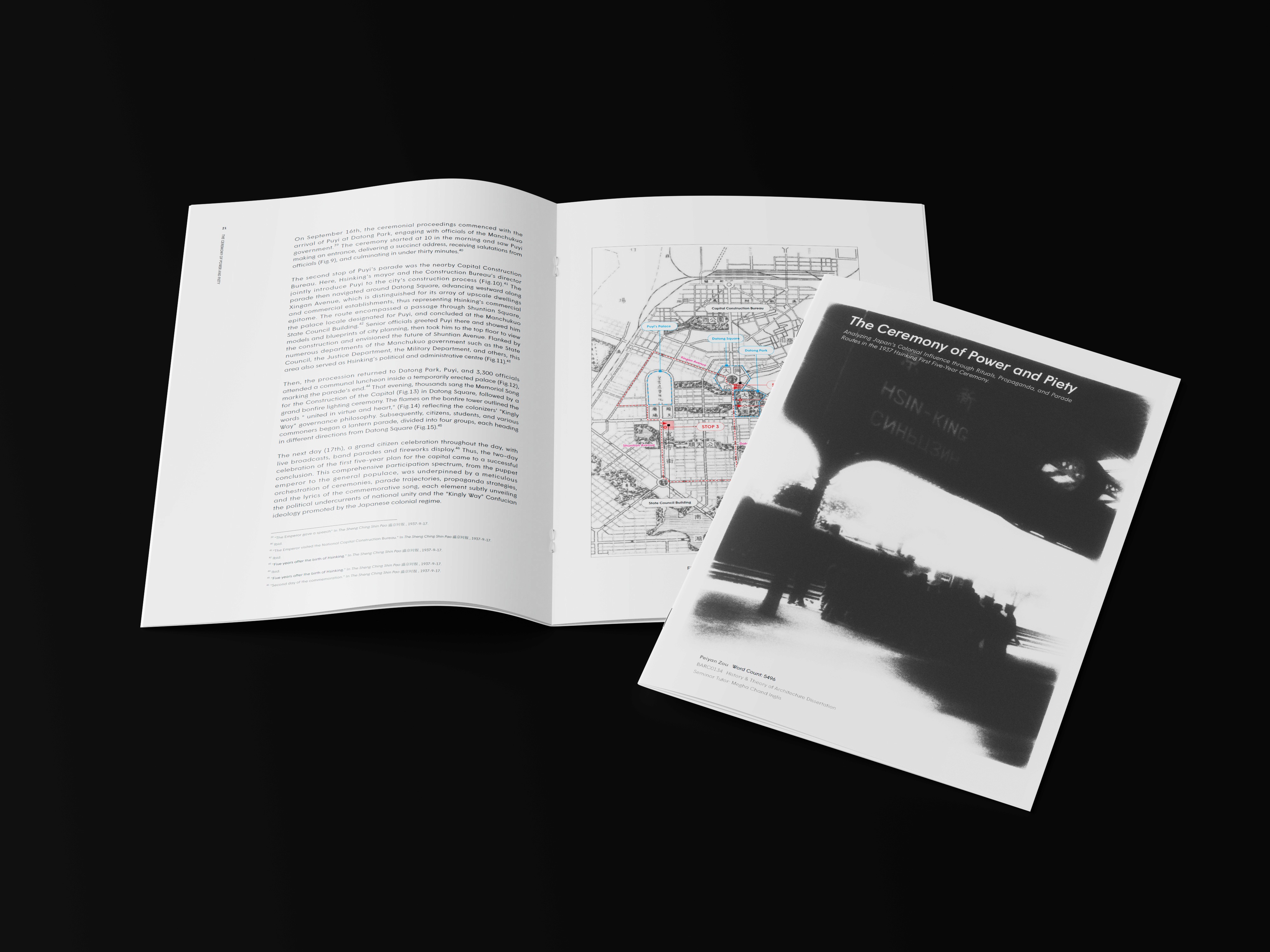
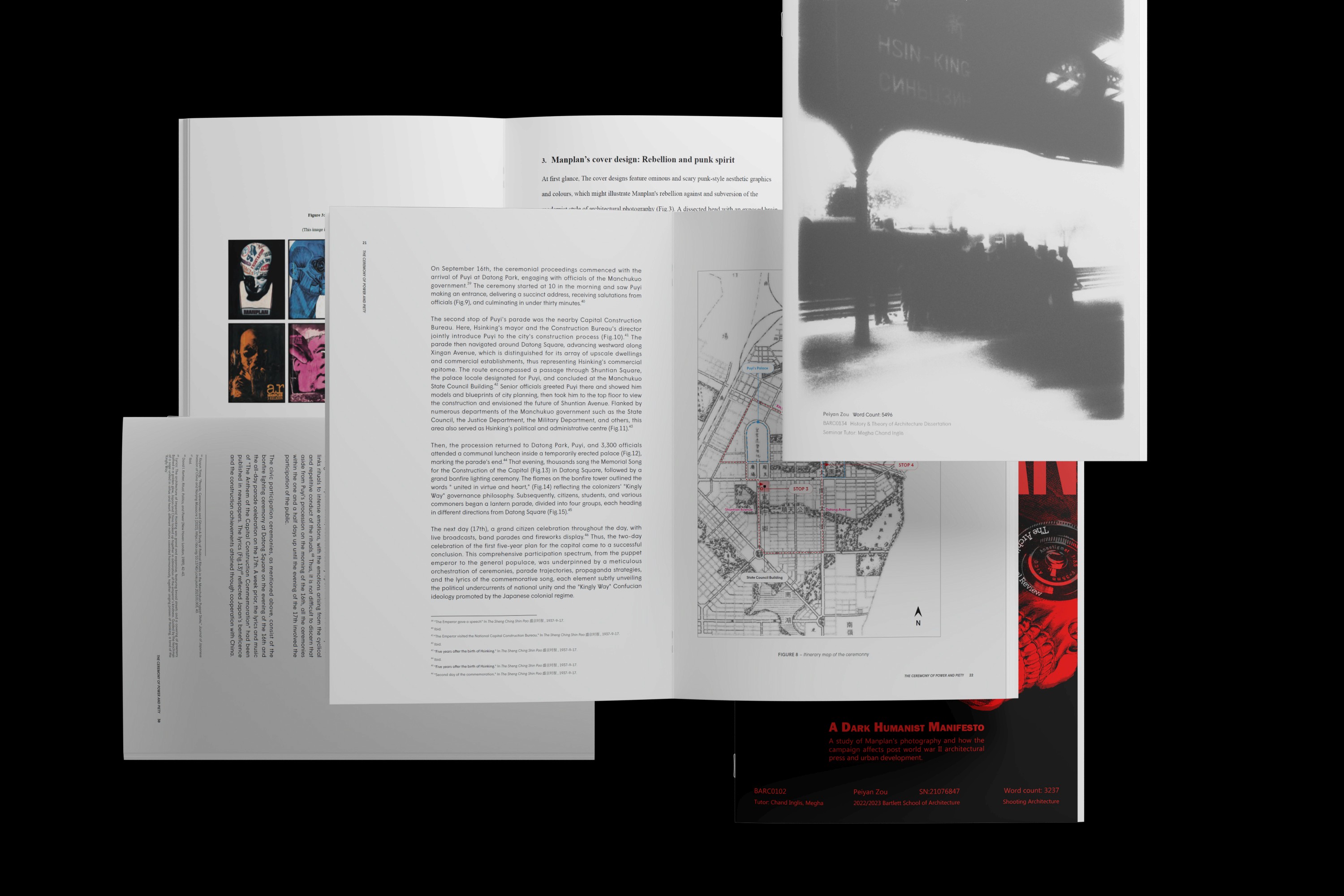
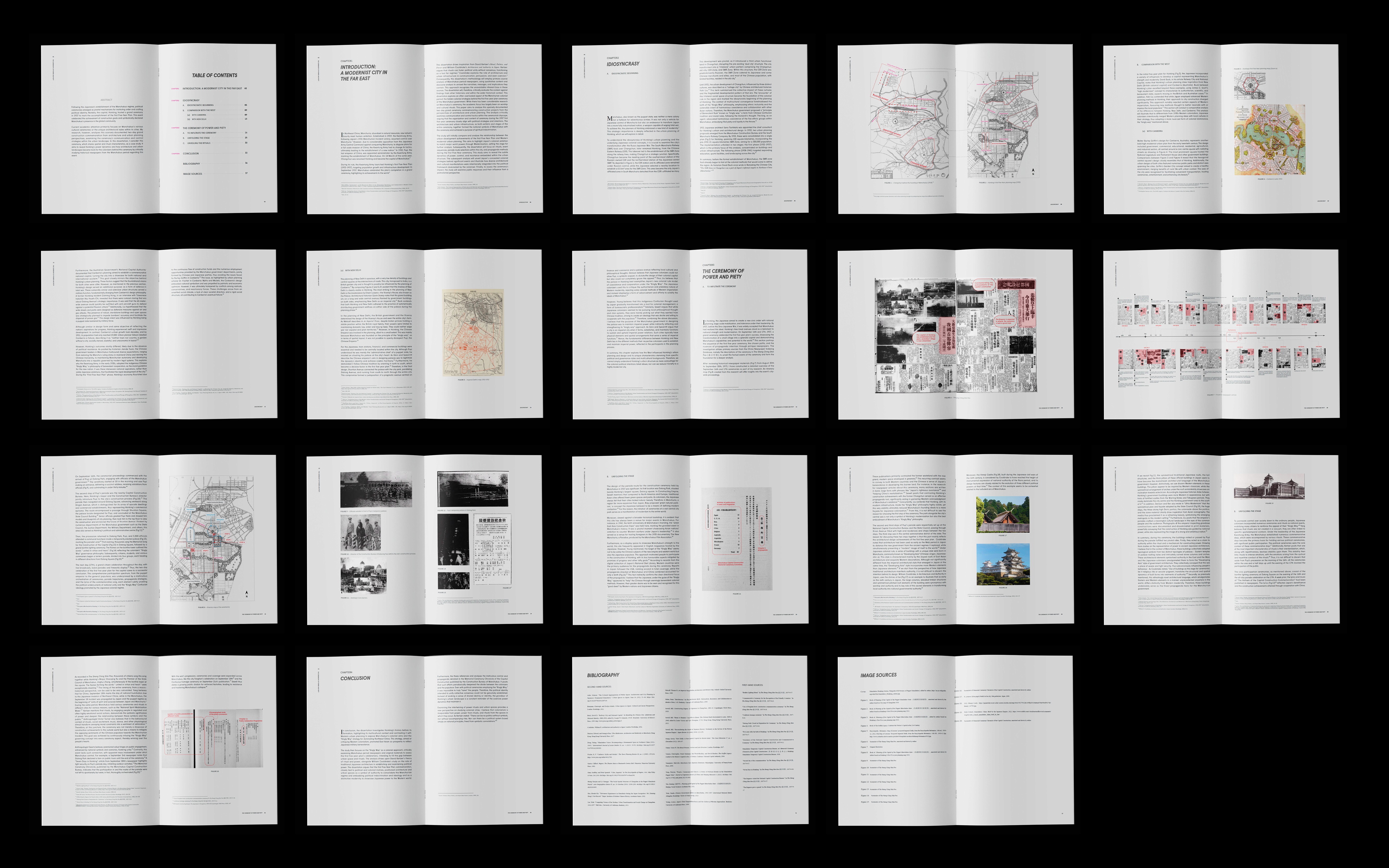
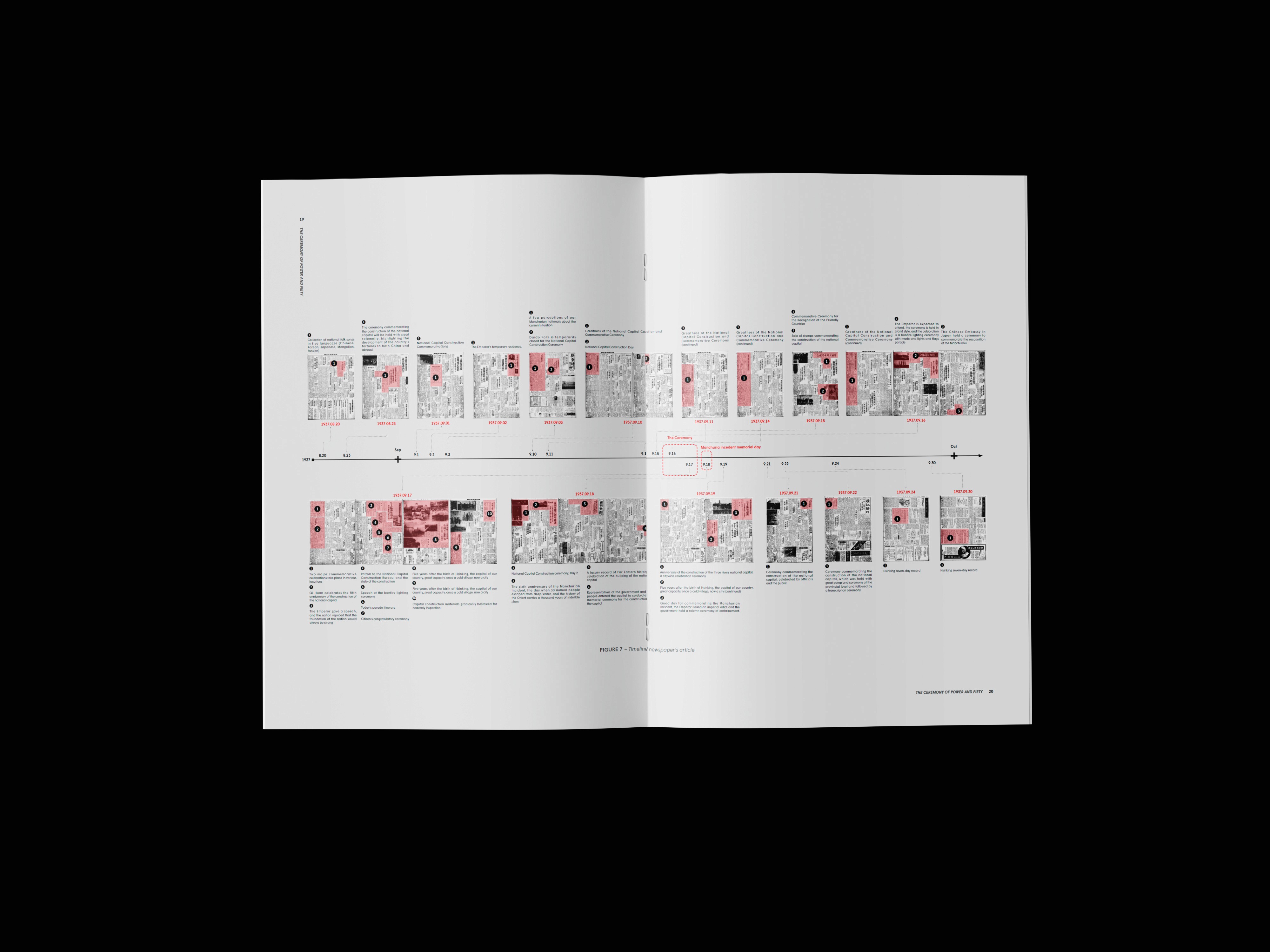
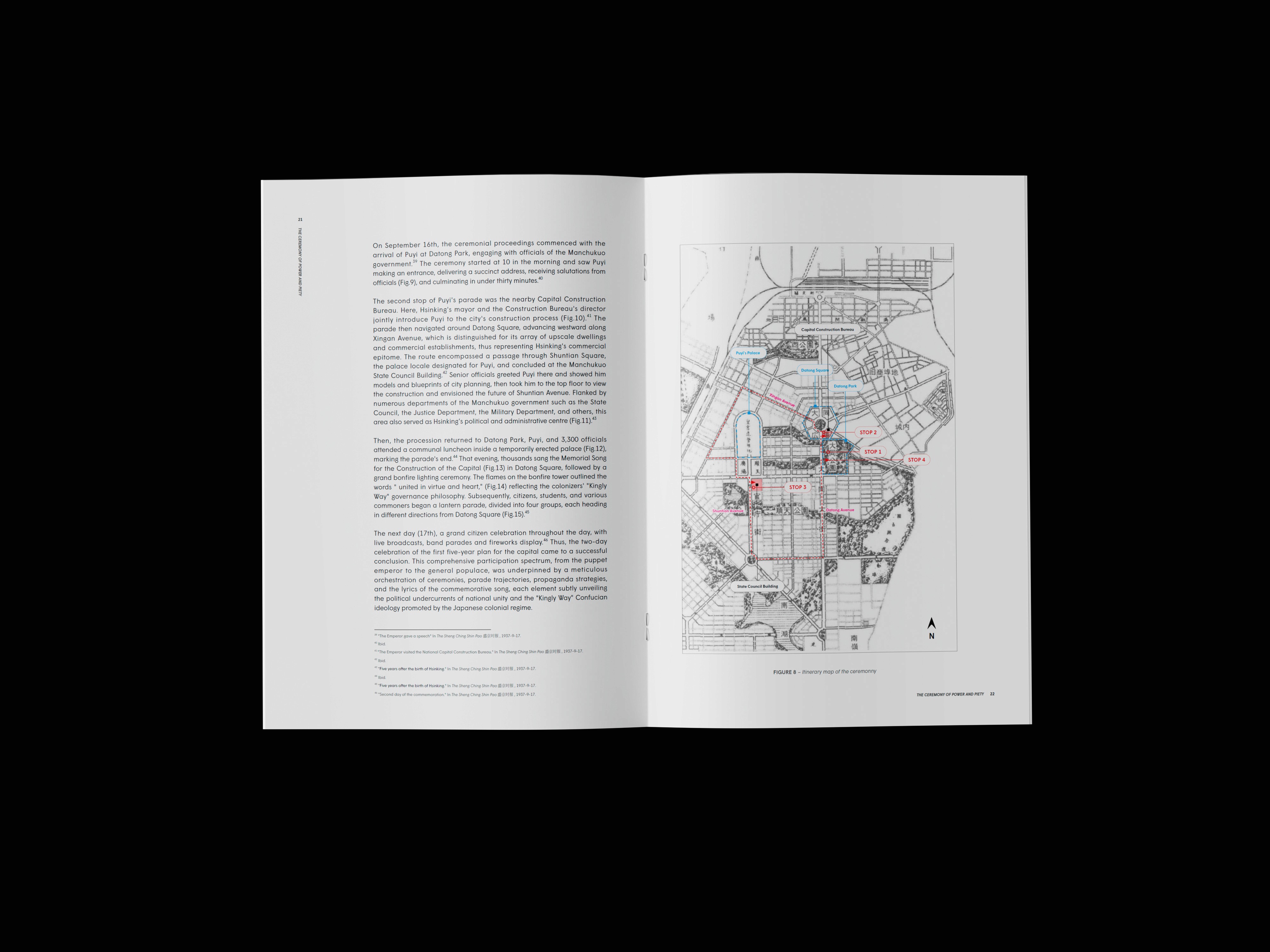
This dissertation examines the 1937 First Five-Year Plan ceremony in Hsinking (Changchun), analysing how parade routes, rituals and propaganda turned the colonial capital into a stage for Japanese power. Drawing on archival newspapers and comparative urban history, it shows how architecture and urban planning were instrumentalised as tools of control under the rhetoric of the “kingly way.”
This dissertation examines the 1937 First Five-Year Plan ceremony in Hsinking (Changchun), analysing how parade routes, rituals and propaganda turned the colonial capital into a stage for Japanese power. Drawing on archival newspapers and comparative urban history, it shows how architecture and urban planning were instrumentalised as tools of control under the rhetoric of the “kingly way.”
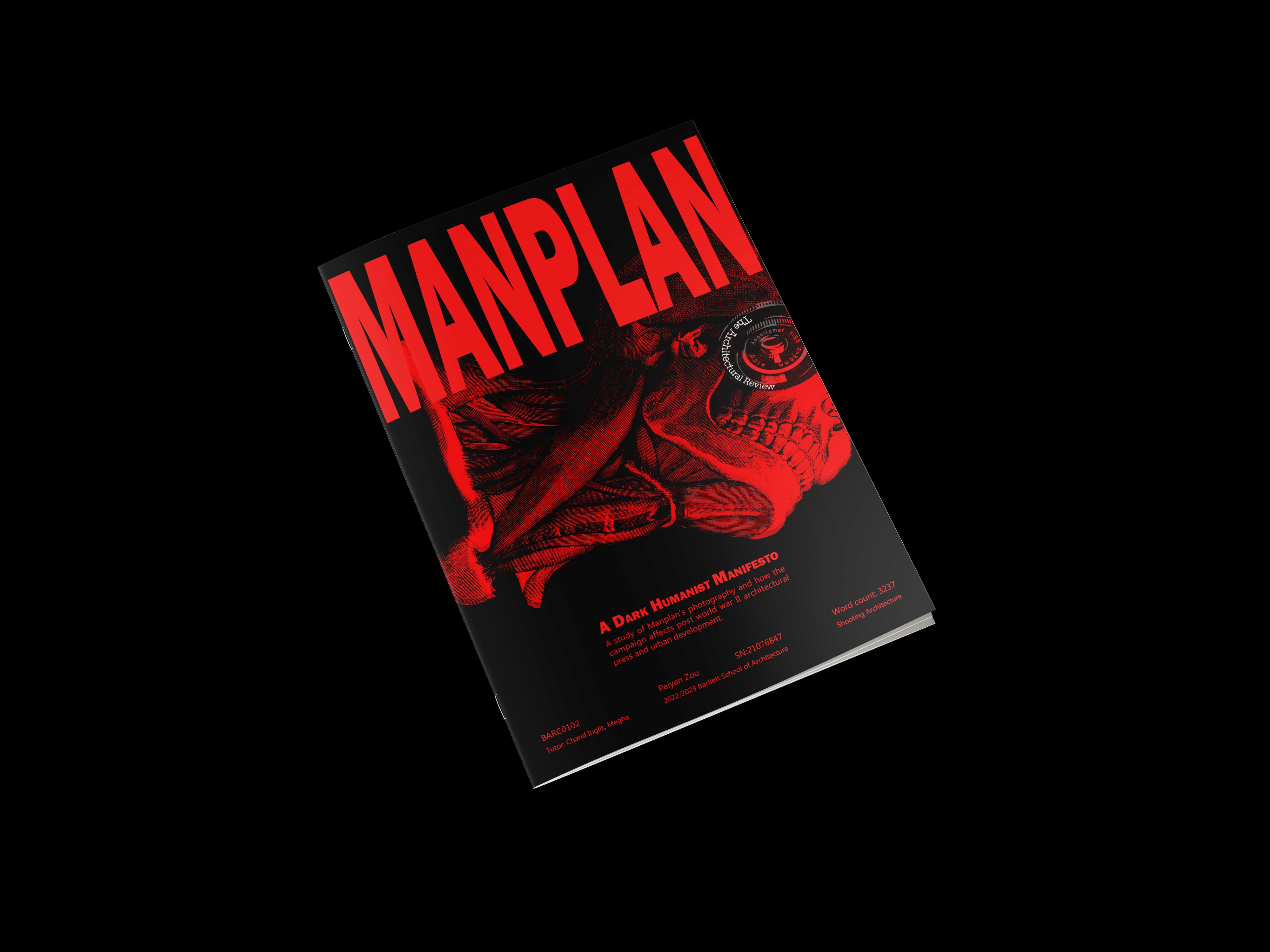
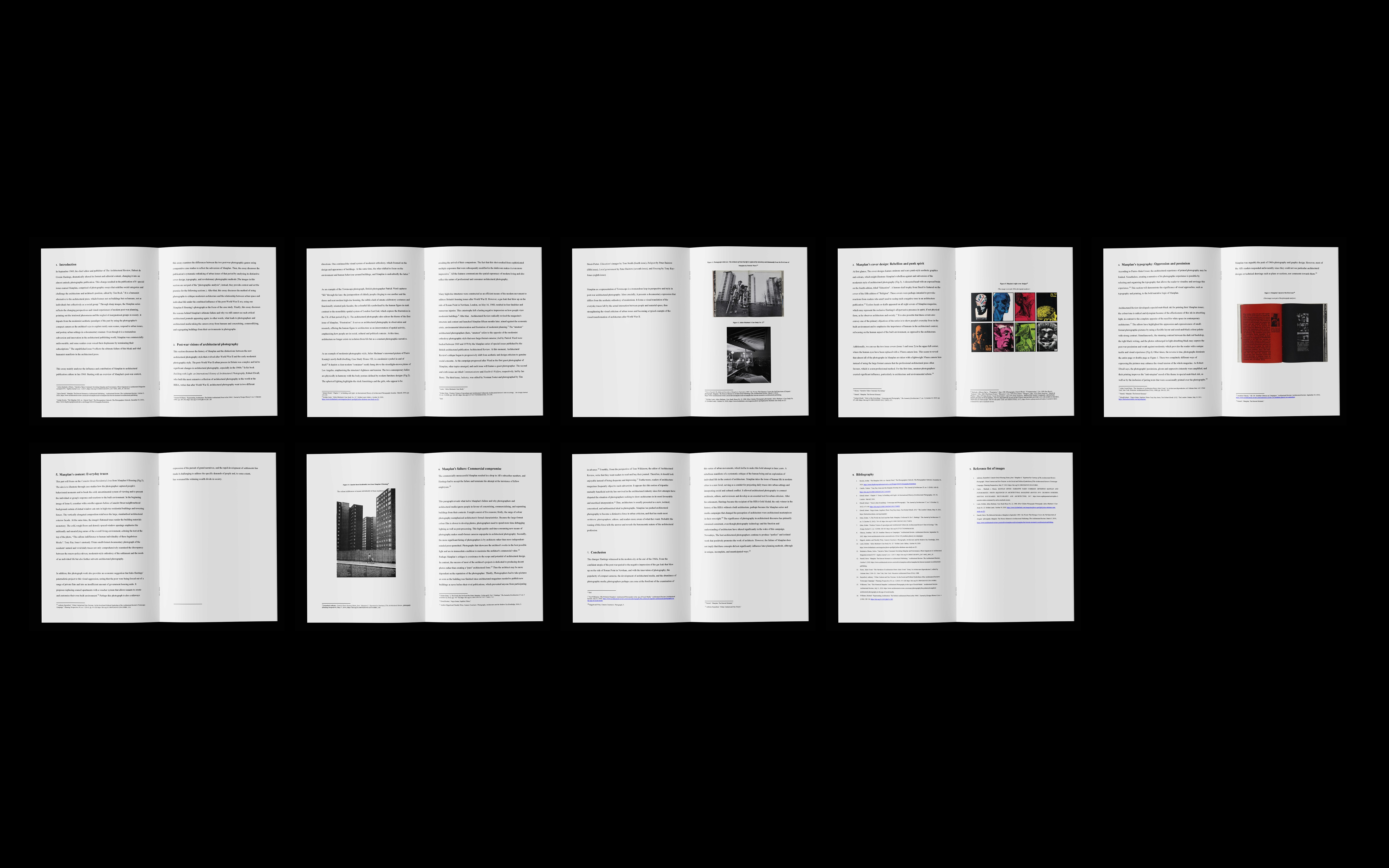
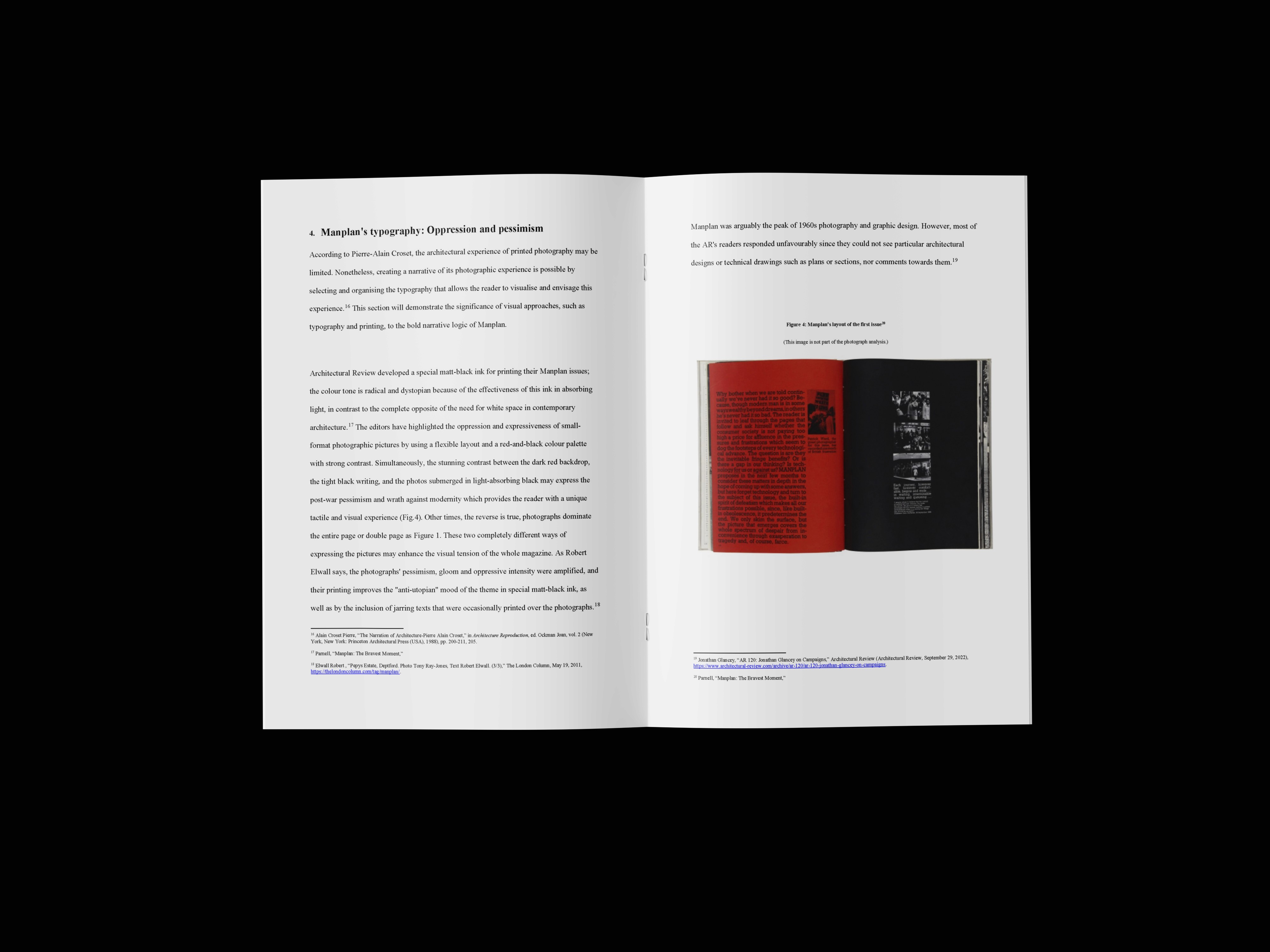
This essay studies Manplan, a series of photographic issues in The Architectural Review (1969–70), and how its bleak, human-focused imagery challenged conventional modernist architectural photography. It discusses Manplan’s graphic language, documentary approach and ultimate commercial failure, arguing that it briefly repositioned photography as a critical instrument for reading post-war urban life.
This essay studies Manplan, a series of photographic issues in The Architectural Review (1969–70), and how its bleak, human-focused imagery challenged conventional modernist architectural photography. It discusses Manplan’s graphic language, documentary approach and ultimate commercial failure, arguing that it briefly repositioned photography as a critical instrument for reading post-war urban life.